사랑당 – 푸른 빛의 전설
하태석, 권병준, 김대희
제주도 민속신앙인 당신앙은 다양한 당신들이 각각 직능적인 역할을 갖고, 각 당별로 특정한 직능을 담당한다. 특정한 구복과 의식이 특정한 당의 직능적, 공간적 성격을 결정한다. 사랑당은 당신앙의 종교적인 면보다는 문화적인 측면을 현대적으로 재창조하고자 하는 시도이다. 사랑당은 사랑방적인 공간적 커뮤니티성을 당 문화에서 재발견하고자 한다. 이곳은 지역주민과 외지인들이 만나는 커뮤니티 관광지이다.
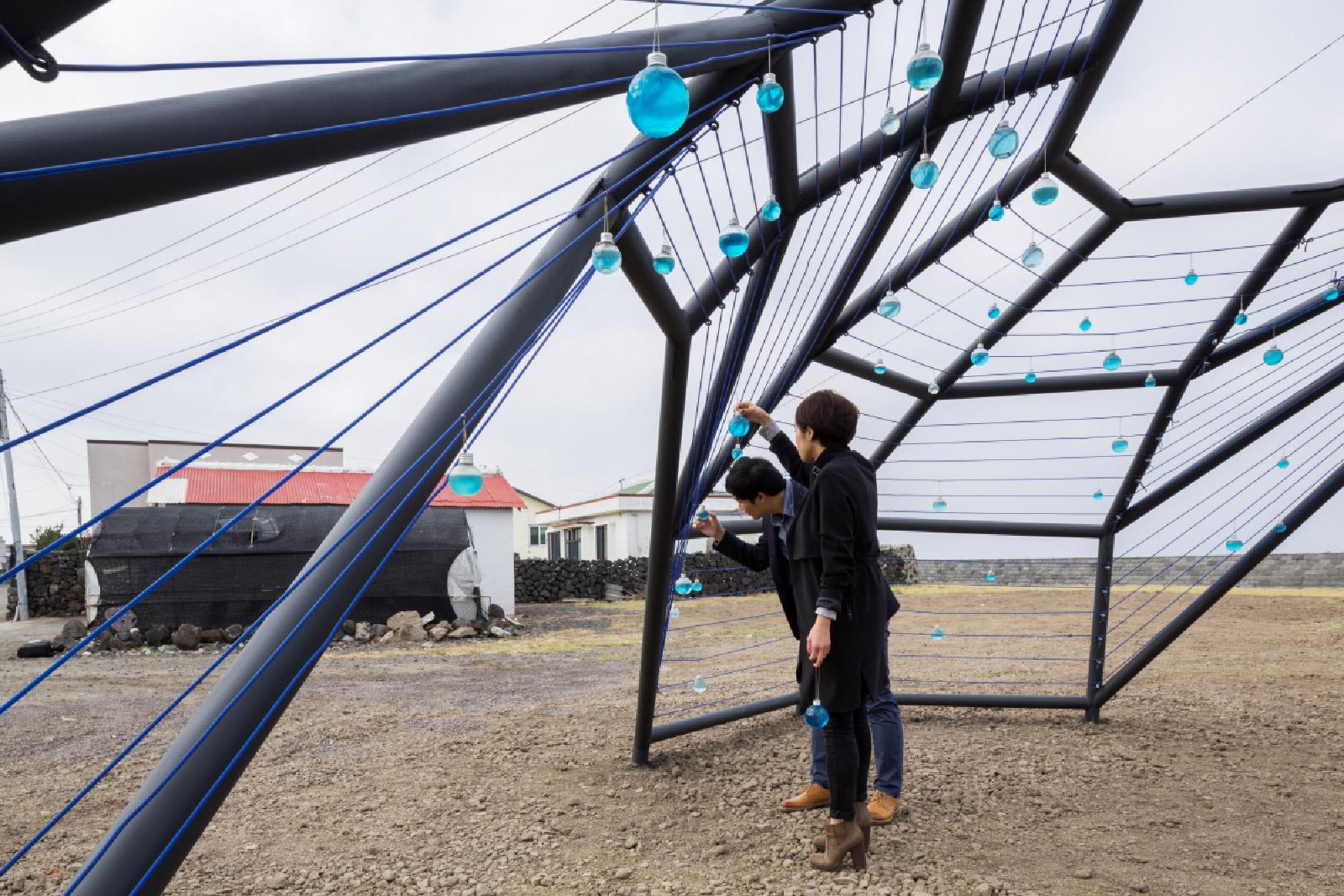
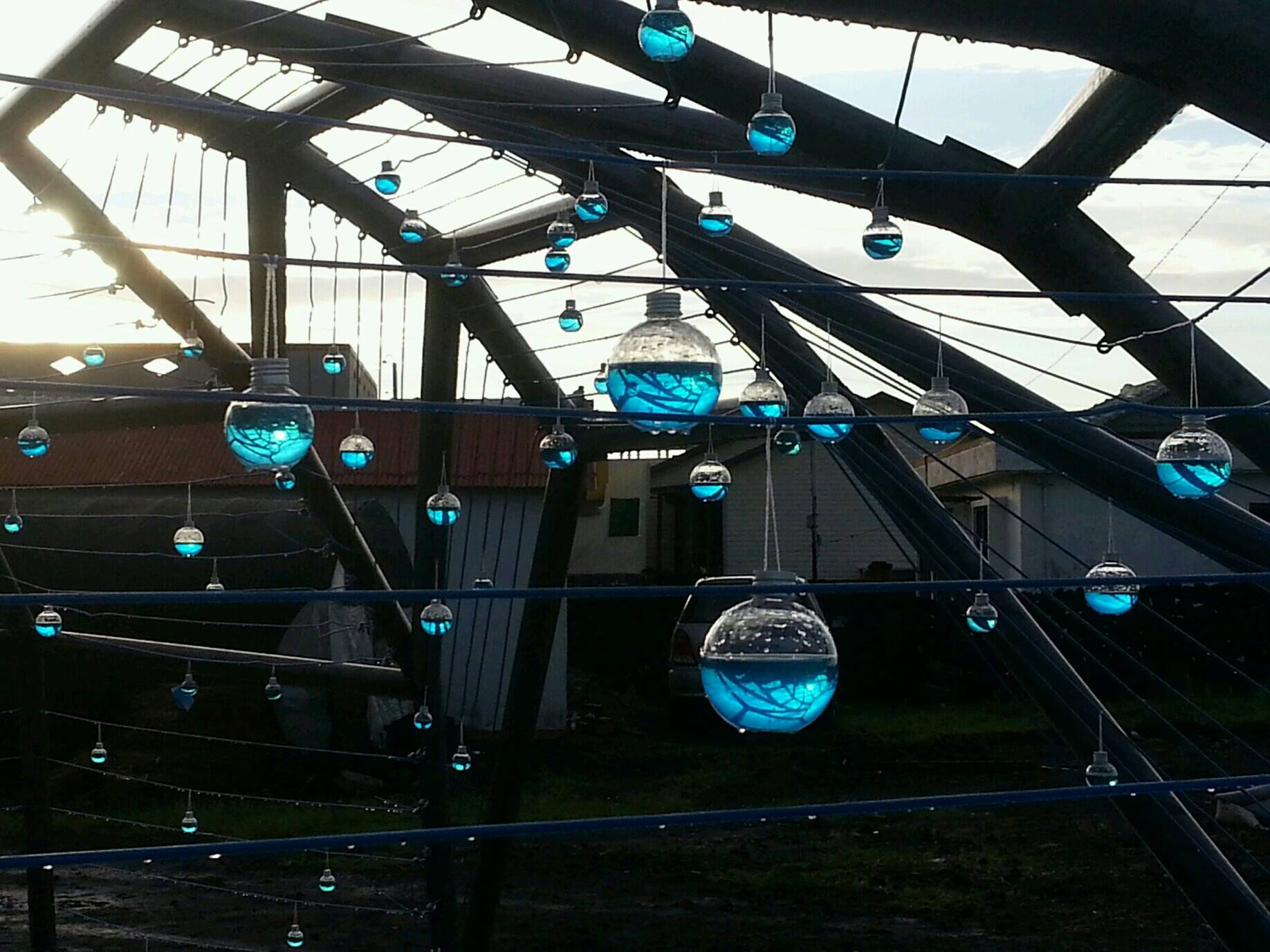
또한 사랑당은 전기 없이 생물학적인 방법으로 빛을 발하는 조명 파빌리온이다. 대기 중의 이산화탄소를 사용하며 빛과 함께 산소를 내보내게 된다. 이는 생물발광 미세조류에 의해 이루어진다. 생물발광 미세조류들은 이 파빌리온에서 캡슐에 넣어져 열매처럼 자란다. 바람은 캡슐을 흔들며 미세조류들이 자라고 빛이 나게 작동시킨다. 특정한 방향의 바람은 특정한 소리를 파빌리온 공간에 주입한다.
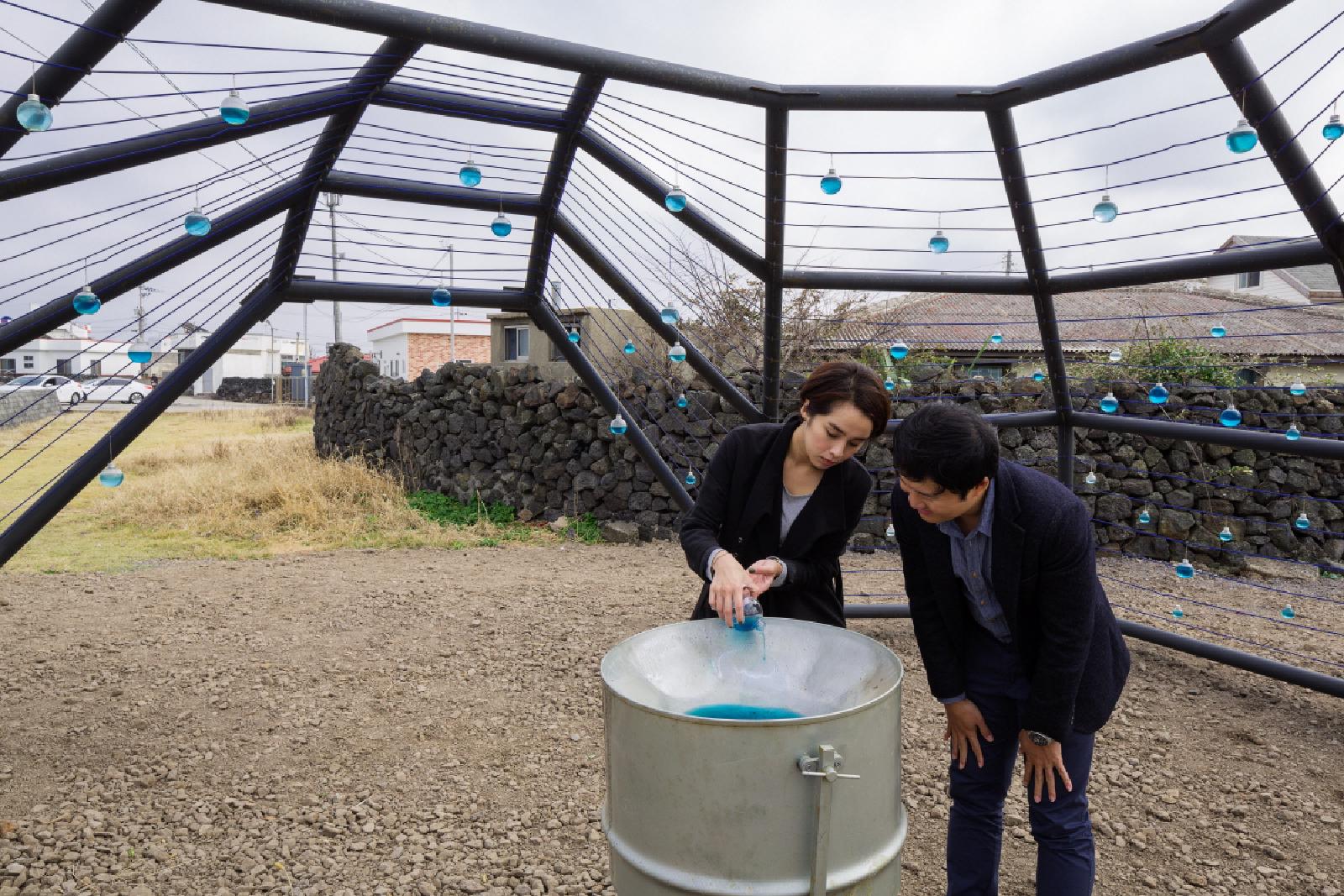
이 캡슐들은 이곳을 찾는 관광객에 의해 수확된다. 당의 의식적 형식을 차용하여 연인이나 사랑을 시작하는 사람들이 사랑당에 와서 캡슐을 구입해 제단에 생물발광 미세조류를 방생하는 의식을 통해 바다의 신에게 사랑을 구복하는 직능적 성격을 갖는다. 이 직능은 참여자의 방생 의식을 통해 실현된다.
The folk belief of “Dang” (village shrine) in Jeju Island has various deities, each with specialized roles and responsibilities for specific duties assigned to each shrine. Particular wishes and rituals determine the functional and spatial nature of a specific shrine. Sarangdang is an attempt to recreate the cultural aspect of Dang belief rather than its religious side in a modern way. Sarangdang aims to rediscover the community spirit reminiscent of a “sarangbang” (a traditional communal space) within the Dang culture. This is a community tourism destination where locals and outside visitors gather.
Sarangdang is also a light pavilion that emits light through biological methods without electricity. It uses carbon dioxide from the air and releases oxygen along with light. This is achieved by bioluminescent microalgae. The bioluminescent microalgae grow like fruits in capsules inside this pavilion. The wind shakes the capsules, allowing the microalgae to grow and produce light. Winds from specific directions infuse particular sounds into the pavilion space.
These capsules are harvested by tourists visiting this place. Borrowing the ritualistic form of shrines, Sarangdang takes on a functional role where couples or those starting a romantic relationship come to purchase capsules and release the bioluminescent microalgae onto an altar, making offerings to the sea god to bless their love. This function is realized through the participants’ release ritual.
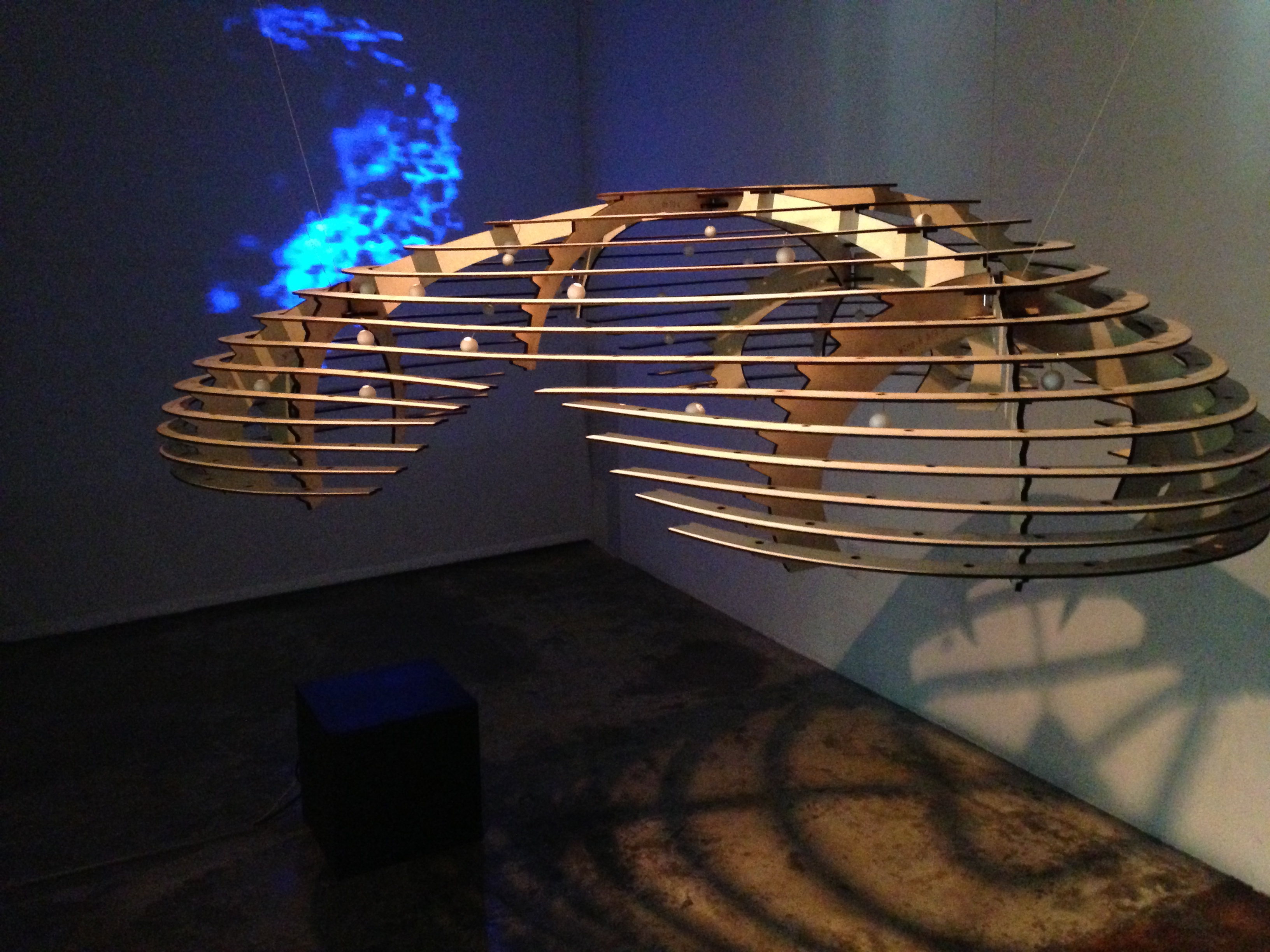
Exhibited at ARKO Art Center, Seoul, KR, 2013
Installed at Gimnyeong, Jeju, KR, 2013
 김대희 | Dey Kim