보이지 않는 청자
(2018)
미생물 소리 번역기 모델 제작을 위한 소리와 Escherichia coli K-12의 소리반응 유전자의 관계 분석 연구
미생물은 사회적 생명체로, 복잡한 소통 방식을 가지고 있다. 그들의 소통은 단순히 화학적 반응에 그치지 않고, 다양한 물리적 메커니즘을 활용한다. 연구에 따르면 미생물은 소리파, 전자기파, 전류 등을 매개로 상호작용한다. 특히 주목할 만한 점은 미생물이 특정 소리를 만들어내고, 또 그러한 소리에 반응할 수 있다는 사실이다. 이는 우리와 미생물 사이의 잠재적 소통 가능성을 암시한다. “번역기”라는 표현은 단순한 기술적 도구 이상의 의미를 지닌다. 이는 서로 다른 생명체 간의 이해와 공감의 가능성을 상징적으로 나타내며, 생명의 다양성과 상호 연결성에 대한 깊은 성찰을 제안한다.
우리가 미생물의 소리를 듣고, 미생물이 우리의 소리를 들을 수 있다면 그들과 소통할 가능성이 있지 않을까? 대화는 특정 정보를 ‘주고’ ‘받는’ 일련의 과정인데, 본 연구에서는 이를 분리하여 ‘주는’ 신호에 어떠한 반응을 보이는지에 집중하려 한다. 즉, 미생물에게 특정 소리를 들려 주고 그에 따른 유전자적 변화를 확인하여 미생물 그 소리를 ‘듣는지’ 알아보고자 한다.
디지털로 합성된 white noise를 저음, 중음, 고음의 세 음역대로 filtration하여 Low Frequency Range (LFR: 20 ~ 200 Hz), Mid Frequency Range (MFR: 200 ~ 2000 Hz), High Frequency Range (HFR: 2000 ~ 20000 Hz)로 만들고, 이에 노출 되었을 때, up/down regulation되는 E.coli K-12의 유전자를 확인 하였다. 또한, 소리에 노출되었을 때, 생장곡선이 달라짐도 확인하였다.
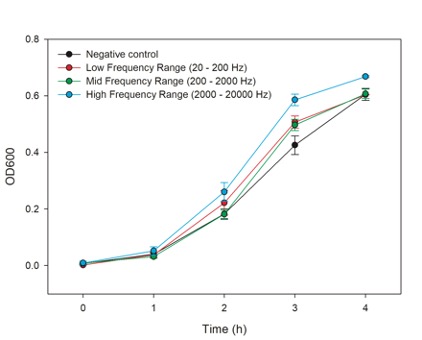
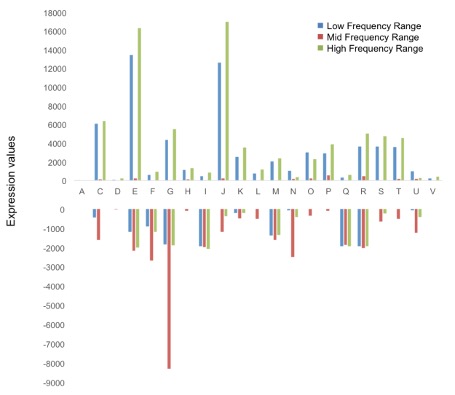
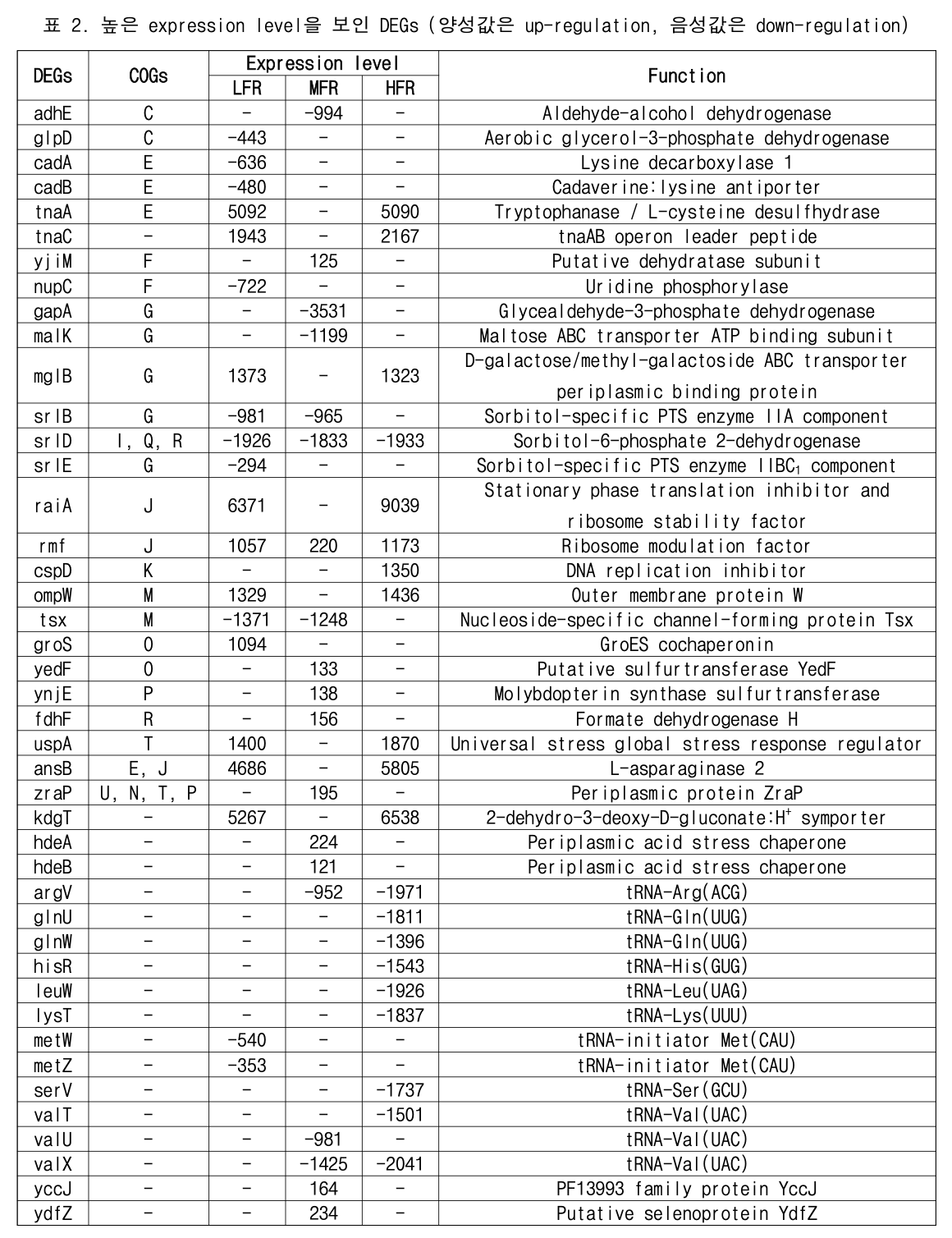
위의 연구 결과에서 볼 수 있듯이, E. coli K-12가 세가지 음역대의 소리(LFR, MFR, HFR)에 노출 되었을 때, 그들의 생장 곡선에 변화가 오고, 여러 RNA의 expression level이 달라졌다. 지금까지 발표된 논문에 의하면 특정한 소리에 의해 생장이 촉진/억제되거나, 세포의 크기가 변하거나, 대사물질이 달라지거나 하는 등의 결과는 있었지만, 유전자에 미치는 영향을 직접적으로 본 연구 결과는 없었다. 따라서 본 연구결과는 관련 연구 분야에 새로운 증거를 제시하는 의미가 있다.
Relationship Between Sound and Sound-Responsive Genes of Escherichia coli K-12 for the Development of Microbial Sound Translator Model
Microorganisms are social living entities with complex communication methods. Their communication extends beyond simple chemical reactions, utilizing various physical mechanisms. Research indicates that microorganisms interact through sound waves, electromagnetic waves, and electrical currents.
Notably, microorganisms can generate specific sounds and respond to such sounds. This suggests the potential for communication between us and microorganisms. The term “translator” carries meaning beyond a mere technical tool. It symbolically represents the possibility of understanding and empathy between different life forms, proposing a profound reflection on the diversity and interconnectedness of life.
What if we could hear the sounds of microorganisms, and they could hear our sounds? Could this enable communication between us? Dialogue is a process of ‘giving’ and ‘receiving’ specific information. This research aims to focus on the response to the ‘given’ signals by isolating this process. Specifically, the study seeks to understand whether microorganisms ‘hear’ by exposing them to particular sounds and examining the resulting genetic changes.
In this study, we filtered digitally synthesized white noise into three frequency ranges: Low Frequency Range (LFR: 20 ~ 200 Hz), Mid Frequency Range (MFR: 200 ~ 2000 Hz), and High Frequency Range (HFR: 2000 ~ 20000 Hz). We exposed Escherichia coli K-12 to these frequency ranges to investigate the genetic upregulation or downregulation that occurred. Additionally, we examined the changes in the growth curve of E. coli K-12 when exposed to sound.
As observed in the results of this study, when E. coli K-12 was exposed to sound in the three frequency ranges (LFR, MFR, HFR), changes in their growth curve occurred, and the expression levels of various RNAs differed. Previous studies have reported effects of specific sounds on promotion/inhibition of growth, changes in cell size, and alterations in metabolites. However, there have been no direct research findings on the impact of sound on genes. Therefore, the results of this study provide new evidence in the relevant research field. The findings of this study contribute to understanding the relationship between sound and the genetic responses of Escherichia coli K-12.
Credit
지원: 한국연구재단
주관연구기관: 제주대학교
연구자: 김대희, 운노 타쯔야
 김대희 | Dey Kim